Lead capture for Wineries Exhibiting in China
Discover how international wineries can build an end-to-end B2B lead capture system for China trade fairs, integrating WeChat QR routing, PIPL compliance, and structured qualification to maximize ROI.
Capturing qualified commercial buyers at Chinese wine trade shows requires moving beyond physical business cards to localized digital workflows. An effective strategy pairs on-site WeChat QR routing and bi-lingual data capture with Personal Information Protection Law (PIPL) compliance and fast commercial qualification. In a rebalancing market where commercial buyers evaluate SKUs with precision, your booth workflow must instantly capture importer credentials, volume capacity, regional distribution reach, and target price tiers.
According to MS Advisory's 2026 Wine Market Report, China's wine market reached $40.4 billion in 2024 and continues to expand at a compound annual growth rate (CAGR) exceeding 11%. Following major structural developments, such as China lifting tariffs on Australian wine in March 2024—which pushed Australian shipments past Aus$500 million that year according to Jane Anson's 2025 Market Insights—and China formalizing its membership in the International Organisation of Vine and Wine (OIV) through 2024 and 2025, trade fair floors have become highly competitive. Wineries that rely on passive badge scanning or English-language brochures face low conversion rates. This operational guide outlines how to build an efficient B2B lead capture architecture tailored for trade fairs across China.
The Commercial Shift: Moving Beyond the Paper Business Card
At high-traffic exhibitions, paper business cards (名片, míngpiàn) remain a cultural gesture of professional respect, but they are inefficient for digital pipeline management. Many cards collected at wine exhibitions lack direct mobile numbers, feature discontinued email addresses, or end up buried in luggage without context.
In China's business landscape, the primary conduit for B2B trade conversation is WeChat. When a qualified buyer visits your stand, the interaction must immediately transition into an organized digital channel. However, storing leads across multiple sales representatives' personal WeChat accounts creates data silos and risks losing contacts when staff turn over.
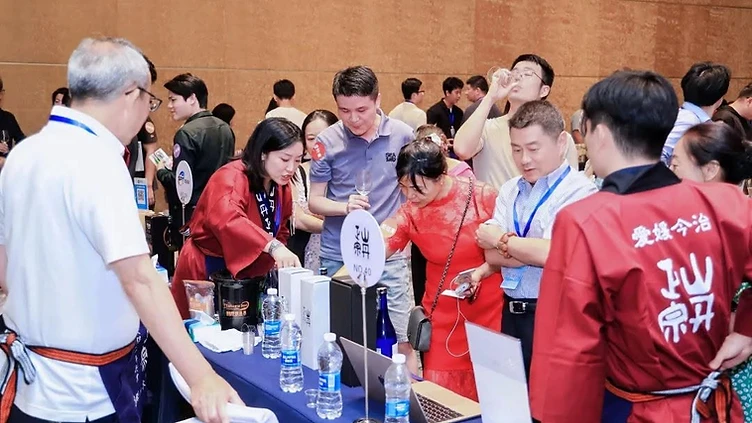
Wineries exhibiting at trade events like Interwine Events require a consolidated system: scanning printed buyer cards, capturing their WeChat contact profiles, and logging operational criteria into a single CRM or structured database within minutes of the conversation.
Designing Your On-Site Digital Lead Architecture
To ensure frictionless data capture, wineries must deploy a booth mechanism that accommodates how Chinese beverage buyers actually operate. This setup hinges on three core technical elements:
1. WeChat Enterprise QR Codes (WeCom)
Instead of having attendees scan individual personal WeChat accounts, equip booth staff with WeCom (Enterprise WeChat) QR codes. When a buyer scans the booth code, the system can automatically:
- Send an immediate bilingual welcome message;
- Deliver a mobile-optimized digital catalogue, price list (CIF/FOB), and brand fact sheet;
- Tag the visitor with specific booth rep IDs and initial category interests (e.g., bulk wine, private label, high-end estate bottlings).
2. Digital Qualification Forms Behind QR Menus
Buyers looking for agency partnerships or distribution agreements frequently prefer reviewing digital spec sheets rather than carrying heavy printed literature. Place tabletop QR stands near tasting flights. When buyers scan to view tasting notes, route them through a brief, friction-free qualification form asking for:
- Business model: National Importer, Regional Wholesaler, On-Trade Group, Corporate Gifting, or E-commerce Retailer;
- Distribution territory: Tier 1 hubs (Shanghai, Beijing, Guangzhou, Shenzhen), emerging provincial capitals, or coastal secondary markets;
- Target entry tier: Entry-level OEM, premium retail (€8–€15 EXW), or fine wine allocation (€30+ EXW).
3. Immediate OCR Card Scanning
For buyers who prefer handing over physical cards, booth managers should use mobile Optical Character Recognition (OCR) tools specialized in Chinese simplified characters (such as CamCard or integrated WeCom scanners). Staff should snap the card immediately after the tasting, select 3–4 standard qualification checkboxes, and assign immediate follow-up deadlines.
Regulatory Compliance: Navigating China's PIPL
China’s Personal Information Protection Law (PIPL), effective since late 2021, strictly regulates how personal data is collected, stored, and processed across commercial operations. Foreign wineries collecting buyer contact information on Chinese soil must ensure regulatory compliance.
- Clear Consent: When using digital registration mini-programs or QR questionnaires, display a concise bilingual data privacy statement noting that the information is captured exclusively for commercial business communication and partner evaluation.
- Data Cross-Border Transfers: If your on-site capture tool pushes raw customer records to headquarters servers outside China, ensure your collection methods align with current regulatory exemptions for standard business-to-business contractual execution, or use a local cloud database instance for on-site logging before syncing aggregate commercial accounts.
- Direct Opt-Out: Provide a simple mechanism for contacts to decline subsequent broadcast messaging in post-event communications.
Developing a Tiered Qualification Rubric at the Stand
Not every visitor tasting your reserve vintage is a viable import partner. With thousands of attendees moving through exhibition halls, staff must qualify leads quickly before committing extended meeting slots.
To optimize on-site resources, evaluate prospects using this structured qualification matrix:
| Lead Category | Profile Characteristics | Required On-Site Verification | Target Next Step | | :--- | :--- | :--- | :--- | :--- | | Tier 1: Strategic Importer | Active Customs Registration (CR code), bonded warehouse accounts, national distribution | Existing imported portfolio, established retail/Horeca accounts, annual container volume | Schedule closed-door tasting; book structured sessions via Business Matching | | Tier 2: Regional Distributor | Strong provincial wholesale network, looking for regional agency or exclusive SKUs | Sub-distributor count, target sales channel, typical inventory turnover velocity | Share localized price schedules; arrange day-2 booth meeting | | Tier 3: Specialized Buyer | Boutique on-trade sommelier, corporate private client buyer, niche online store | Immediate purchasing authority, direct-to-consumer reach, case-order minimums | Add to regular digital newsletter; provide sample purchase terms | | Unqualified: Casual Attendee | Non-trade consumer, industry enthusiast without import or wholesale license | Lack of verified business entity or trade credentials | Provide standard consumer marketing flyer; politely redirect staff to trade prospects |
By formalizing this rubric prior to the show, your team can separate high-volume commercial buyers from general visitors within three minutes of dialogue, keeping primary tasting tables open for verified commercial partners.
Operational Follow-Up: The 48-Hour Conversion Window
Lead conversion at Chinese trade exhibitions declines sharply after the first 48 to 72 hours post-event. Inboxes become backlogged with untargeted generic pitch decks, and buyers quickly lose context. Accelerate your conversion rate with this focused execution schedule:
- Same-Day WeChat Acknowledgment (Hours 0–12): Send a personalized WeCom message before the day closes: "Thank you for visiting our stand today at Interwine. Attached is the technical sheet for the Cabernet Sauvignon you tasted with [Rep Name]."
- Commercial Pricing Delivery (Hours 12–36): Deliver CIF Hong Kong/Shanghai/Guangzhou pricing breakdowns along with standard logistical terms, pallet configurations, and laboratory analytical data required by China Customs.
- Sample Dispatch or Video Call Booking (Hours 36–72): For Tier 1 and Tier 2 prospects, confirm direct sample dispatch via local domestic bonded stock, or schedule an in-depth video consultation with your chief winemaker.
For more perspective on changing importer preferences and current price trends across major distribution tiers, consult our Market Insights analysis.
Conclusion: Maximize Your Trade Show ROI
Succeeding at wine exhibitions in China requires bridging the gap between world-class viticulture and localized digital operations. When international wineries pair systematic WeChat engagement with rapid qualification and strict PIPL compliance, foot traffic translates directly into an actionable commercial pipeline.
If your winery is preparing its Asian market expansion and seeking direct access to verified Chinese importers, distributors, and off-trade retail buyers, apply today to Become an Exhibitor at an upcoming edition of Interwine.
Sources
- MS Advisory: Wine Market in China Trends, Growth, and Consumer Preferences (2026)
- Jane Anson: Market Insights - Chinese Wine Industry in 2025 (2025)
- Euromonitor International: Wine in China Market Research Report
Key Takeaways
- —WeChat Enterprise (WeCom) integration is essential to capture, centralize, and preserve lead data instead of relying solely on physical business cards.
- —Bilingual QR codes linked to technical spec sheets and CIF/FOB pricing allow wineries to collect buyer data while streamlining on-booth conversations.
- —China's Personal Information Protection Law (PIPL) requires clear commercial consent and transparent data practices during on-site trade registrations.
- —A formal 3-tier qualification rubric helps booth staff distinguish licensed customs importers from regional sub-distributors and casual consumers.
- —Post-event conversion hinges on an aggressive 48-hour follow-up window executed through localized mobile messaging rather than cold email threads.
Frequently Asked Questions
Why are physical business cards insufficient at Chinese wine trade shows?
Paper business cards frequently lack direct contact details, omit mobile-first messaging accounts, and often lead to lost contacts. In China, business communication occurs primarily on WeChat. Capturing leads digitally via WeCom or mobile OCR ensures direct communication, enables central tracking, and protects leads from staff turnover.
How does China's PIPL impact trade fair lead collection?
The Personal Information Protection Law (PIPL) governs the collection of personal information. Trade booth operators must inform visitors why their contact details are being collected (e.g., commercial supply quotes and sample follow-ups) and obtain explicit consent via bilingual digital questionnaires or registration prompts.
What information should wineries prioritize during booth qualification?
Staff should verify the buyer's business model (national importer, regional distributor, on-trade group), whether they hold an active Customs Registration (CR) code, their primary geographic distribution territory, target price segments (EXW/CIF), and annual purchasing volume.
How quickly should wineries follow up with Chinese wine buyers after an expo?
Initial personalized digital follow-up via WeChat should occur within 12 to 24 hours of the meeting. Formal CIF/FOB pricing, logistical parameters, and technical sheets should be provided within 48 hours to capitalize on trade fair momentum before buyers finalize supplier shortlists.