Interwine Guide to Show ROI measurement
A commercial B2B guide for wineries and international beverage producers on measuring trade show ROI, establishing accurate financial formulas, tracking wine pipeline attribution, and maximizing commercial results at Interwine.
To measure trade show return on investment (ROI) accurately, wineries and wine exporters must isolate both the total cost of participation and the direct financial gross margin generated from contracted purchase orders and distribution agreements. The standard formula is: Trade Show ROI (%) = [(Gross Profit Generated from Show Leads − Total Show Investment) ÷ Total Show Investment] × 100. Because the international wine and spirits sales cycle spans several months from initial sample tasting to final container clearance, measuring return demands a dual framework: quantitative financial returns (hard ROI) and qualitative operational benchmarks, known as Return on Objectives (ROO).
Trade exhibitions remain an essential sales channel for wine producers seeking importer relationships, regional wholesale listings, and private-label contracts. However, treating trade fairs as broad marketing expenditures rather than quantifiable commercial sales pipelines often obscures your real financial performance. Research by the Center for Exhibition Industry Research (CEIR) consistently indicates that lead volume and post-show closed deals are the primary metrics global exhibitors rely on when evaluating event ROI. By establishing clear accounting protocols, tracking realistic sales pipeline velocity, and adopting structured lead scoring, wine producers can turn an event presence into a predictable growth engine.
The True Cost of Exhibiting: Building the Expense Denominator
One of the most frequent accounting missteps among beverage exhibitors is under-reporting their cost denominator. Evaluating financial return accurately requires accounting for every line item spent to secure the exhibition presence, not merely the floor space reservation fee.
1. Direct Booth Infrastructure and Logistics
- Space and Construction: Raw floor space or modular turnkey stand rental fees.
- Design, Build, and Graphics: Custom furniture, bespoke wine racking, refrigeration rental, glass washing facilities, and lighting.
- Sample Freight and Tariffs: Air freight or consolidated ocean shipping for wine samples, customs brokerage fees, destination import clearance, and compliance duties.
2. Operational, Travel, and Staffing Costs
- Travel and Hospitality: Flights, ground transit, and lodging for the winery's export managers, winemakers, and brand ambassadors. Producers planning their itinerary can review logistical options via Arrival and Transportation and reserve partner hotels through Hotel Accommodation.
- On-Site Consumables and Personnel: Specialized glassware rentals, spittoons, ice supplies, local professional sommeliers, bilingual translators, and badge scanner tech leases.
- Visa Documentation and Compliance: Official documentation costs for international staff traveling abroad. Exhibitors requiring formal paperwork can coordinate through Invitation Letter and Visa Support.
3. Pre-Show Marketing and Post-Show Follow-up
- Promotional Collateral: Multilingual sell sheets, technical tasting notes, QR code integration, digital trade catalogues, and local advertising.
- Digital Integration & Matchmaking: Fees for targeted buyer pre-booking services, direct outreach, or specialized Business Matching meetings.
By tallying every direct and indirect item, you establish your comprehensive baseline: the Total Cost of Exhibiting (TCE).
The Revenue Numerator: Attribution Across the Wine Sales Cycle
Unlike consumer retail operations where on-site Point of Sale (POS) receipts deliver immediate calculation, commercial wine trade events operate on wholesale lead nurturing. Importers, master distributors, regional wholesalers, and hotel/restaurant beverage directors rarely write container-sized purchase orders on the trade floor without due diligence, sample testing, and price structure reviews.
The Calculation Framework
To measure true financial return, track financial performance across distinct conversion windows:
$$\text{Net Financial Return} = \sum (\text{Revenue from Sourced Orders} \times \text{Gross Margin %}) - \text{Total Cost of Exhibiting}$$
$$\text{ROI (%)} = \left( \frac{\text{Net Financial Return}}{\text{Total Cost of Exhibiting}} \right) \times 100$$
As emphasized in trade show financial analysis published by JOOR in 2026, relying purely on top-line revenue rather than net gross profit distorts event performance. If a winery generates $120,000 in gross FOB wholesale revenue from new distributor agreements secured through an exhibition, and produces that product at a 40% gross margin, the realized gross profit is $48,000. If the total exhibition expenditure was $20,000, the calculated financial ROI is:
$$\text{ROI} = \left( \frac{48,000 - 20,000}{20,000} \right) \times 100 = 140%$$
Multi-Touch Attribution and Milestone Windows
Given that international ocean shipping, label registrations, and regulatory approvals can extend from 60 to 180 days post-fair, smart wineries implement milestone tracking:
- Day 30: Cost Per Qualified Lead (CPQL) and sample request audit.
- Day 90: Active commercial proposals submitted, distributor trial orders, and container pricing evaluations.
- Day 180: First production orders invoiced, letter of credit (LC) confirmations, and formal wholesale contract signings.
- Day 365: Full Annual Contract Value (ACV) and repeat re-orders attributed to show contacts.
Key Performance Indicators: Hard Financial Metrics vs. ROO
While gross profit establishes pure ROI, Return on Objectives (ROO) captures vital structural performance indicators that signal future revenue growth.
| Performance Indicator | Metric Type | Measurement Objective | Formula / Tracking Method | | :--- | :--- | :--- | :--- | | Cost Per Lead (CPL) | Financial | Cost efficiency of raw badge contacts | $\text{Total Cost} \div \text{Total In-Booth Scans}$ | | Cost Per Qualified Lead (CPQL) | Financial | Cost efficiency of commercial prospects | $\text{Total Cost} \div \text{Vetted Decision-Maker Contacts}$ | | Sample Conversion Rate | Operational | Proportion of sampled buyers requesting formal pricing | $(\text{Price Quotations Issued} \div \text{Total Targeted Tastings}) \times 100$ | | Pipeline Value | Forward-Looking | Potential transaction value generated | Sum total of all open wholesale proposals linked to show tag | | Customer Acquisition Cost (CAC) | Financial | Total exhibition investment per closed distributor | $\text{Total Cost} \div \text{Number of Signed Distribution Partners}$ |
Lead Qualification and On-Stand Scoring
Not all stand visitors hold equal commercial value. According to lead qualification structures highlighted by event marketing experts at Nytro Marketing (nParallel) in 2025, adopting a point-based scoring criteria directly inside mobile digital badge scanners yields accurate downstream pipeline forecasts. For wineries, a standard scoring tier includes:
- Tier 1 (A-Lead): Licensed wine importer, national wholesaler, or major supermarket retail buyer with immediate open demand, target volume match, and budget authority.
- Tier 2 (B-Lead): Regional distributor, multi-unit on-premise group, or specialist retailer requesting sample cartons and commercial FOB price lists.
- Tier 3 (C-Lead): General industry professional, educational attendee, or peripheral visitor gathering general marketing brochures.
Pre-Show Preparation: Protecting Your Conversion Potential
Maximizing exhibition ROI requires proactive scheduling well before stepping onto the venue floor. Industry benchmarks suggest that successful exhibitors pre-book at least 50% to 60% of their stand appointment capacity before the exhibition doors open.
- Pre-Show Digital Outreach: Announce your participation through international digital trade channels and invite current partner networks. Review regional buyer sentiment via Market Insights to align your varietal portfolio with consumer trends.
- Leverage Structured Matchmaking: Avoid waiting passively for foot traffic. Utilize pre-arranged Business Matching services to secure dedicated face-to-face tastings with verified importers.
- Prepare Technical Assets: Ensure localized sell sheets, wholesale FOB/CIF price calculators, importer clearance protocols, and technical wine spec sheets are fully printed and stored digitally via scan-ready QR codes.
Post-Show Lead Management and Closing the Revenue Loop
Delays in follow-up communication are a primary driver of lost trade show investments. As highlighted in B2B wholesale research from NuORDER, wholesale buyers rapidly move between competing labels; initiating lead contact within two to three days following an exhibition dramatically preserves conversion velocity.
The 72-Hour Rapid Protocol
- Segment Contact Records: Synchronize all badge scans, physical business cards, and tasting preference notes into your primary CRM within 48 hours of exhibition close, tagging each record with the distinct exhibition identifier.
- Deliver Immediate Digital Portfolios: Dispatch tailored follow-up emails delivering PDF price schedules, technical data, tasting notes, and high-resolution bottle photography.
- Dispatch Sample Consignments: Ship formal sample cartons to Tier-1 qualified leads within seven business days while tasting impressions remain front of mind.
Maximizing Your ROI at Interwine
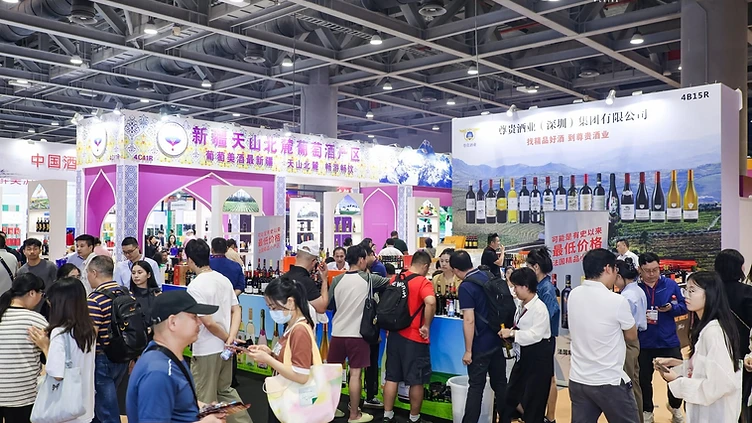
As China’s largest and longest-running professional wine and spirits exhibition, INTERWINE provides international producers with direct access to vetted importers, national distributors, and major retail chains across southern China and nationwide networks. To maximize commercial outcomes and accelerate payback periods, wineries can take full advantage of specialized organizer services:
- Qualified Buyer Attendance: Tap into dedicated networks of certified regional distributors, e-commerce beverage buyers, and on-premise hospitality operators.
- Targeted Masterclasses and Showcases: Position premium cuvées, indigenous varietals, and geographic indications through specialized tasting events featured across Interwine Events.
- Turnkey Logistical Coordination: Take advantage of integrated on-site logistics, glassware handling, and localized marketing support to lower peripheral operating costs.
Ready to expand your distribution pipeline across key commercial beverage channels? Apply now to Become an Exhibitor and establish your brand presence with qualified regional wine buyers.
Sources
- CEIR (Center for Exhibition Industry Research) - Exhibition Performance Metrics
- JOOR - How to Calculate Trade Show ROI: Step-by-Step Guide (2026)
- NuORDER - How To Measure and Increase B2B Trade Show ROI
- Cvent - How to Measure and Calculate Trade Show ROI (2025)
- Nytro Marketing (nParallel) - Top 10 KPIs to Measure Trade Show Effectiveness (2025)
Key Takeaways
- —Calculate trade show ROI using net gross profit rather than unadjusted top-line revenue to avoid overstating commercial performance.
- —Account for every hidden expense in the cost denominator, including sample freight tariffs, glassware rentals, translator fees, and follow-up collateral.
- —Adopt a multi-touch attribution window across 30, 90, 180, and 365 days to match the international wine export distribution cycle.
- —Implement point-based badge scan scoring on the stand to separate volume buyers from casual trade visitors.
- —Initiate buyer follow-ups within 48 to 72 hours post-event to protect lead conversion rates and maintain tasting recall.
Frequently Asked Questions
What is the standard formula for calculating trade show ROI for a winery?
The standard formula is: ROI (%) = [(Gross Profit Generated from Exhibition Leads − Total Cost of Exhibiting) ÷ Total Cost of Exhibiting] × 100. It is critical to calculate using the gross profit margin of wholesale wine sales rather than raw top-line revenue to accurately reflect net financial return.
How long is a realistic attribution window for wine trade show leads?
Because international wine transactions require sample tastings, compliance approvals, customs labeling, and logistics coordination, a realistic attribution window ranges from 90 to 365 days. Track early milestones such as formal price quotes at 30 days, container trial orders at 90 days, and full annual contract value at 12 months.
What is the difference between trade show ROI and ROO?
ROI (Return on Investment) measures direct financial profitability based on net gross margins compared to total exhibition expenses. ROO (Return on Objectives) evaluates qualitative and operational achievements, such as brand visibility, key importer relationship development, market research insights, and targeted buyer meetings.
How can wineries reduce the cost per qualified lead (CPQL) at exhibitions?
Wineries can lower their CPQL by using pre-fair digital appointment scheduling, participating in organized business matching sessions, utilizing reusable modular stands, and training stand staff to disqualify casual visitors quickly in favor of commercial decision-makers.
Why should sample shipping and customs clearance be factored into the exhibition cost?
Sample shipping, air freight, customs handling, and import taxes are necessary expenditures required to execute an international wine stand. Omitting them understates the true cost of customer acquisition and artificially inflates your calculated return on investment.